The new LangGraph retrieval agent template is designed to simplify the development of Generative AI (GenAI) agentic applications that require agents to use Elasticsearch for agentic retrieval. This template comes pre-configured to use Elasticsearch, allowing developers to build agents with LangChain and Elasticsearch quickly.
To get started right away, access the project on Github: https://github.com/langchain-ai/retrieval-agent-template
What is LangGraph?
LangGraph helps developers build stateful, multi-actor applications with LLMs, used to create agent and multi-agent workflows. There are a few new concepts to learn, like cycles, branching, and persistence – these allow developers to implement loops, conditions, and error handling mechanisms in applications. This makes LangGraph a great choice for creating complex workflows, where agents can pause for user input or correction. For more details you can check the Intro to LangGraph course on LangChain Academy.
The new Retrieval Agent Template focuses on question-answering tasks by leveraging knowledge retrieval with Elasticsearch. Users can set up agents capable of retrieving relevant information based on natural language queries. The template provides an easy, configurable interface to Elasticsearch, making it a great starting point for developers looking to build search retrieval-based agents.
About LangGraph’s default Elasticsearch template
Elasticsearch Vector Database Capabilities: The template leverages Elasticsearch’s Vector Storage and Search capabilities to enable more precise and relevant knowledge retrieval.
Retrieval Agent Capability: This enables an agent to use Retrieval-Augmented Generation (RAG), helping Large Language Models (LLMs) provide more accurate and context-rich answers by retrieving the most relevant information from data stored within Elasticsearch.
Integration with LangGraph Studio: With LangGraph Studio, developers can better understand and build complex agentic applications. It provides intuitive visualization and debugging tools in a user-friendly interface, making it easier to develop, optimize, and troubleshoot AI applications.
Start building with LangGraph retrieval agent template
Elastic and LangChain are excited to give developers a headstart building the next generation of intelligent, knowledge-driven AI agents using this template.
Access the retrieval agent template on GitHub, or visit Search Labs for cookbooks using Elasticsearch and LangChain. Happy searching agenting!
Ready to try this out on your own? Start a free trial.
Want to get Elastic certified? Find out when the next Elasticsearch Engineer training is running!
Related content
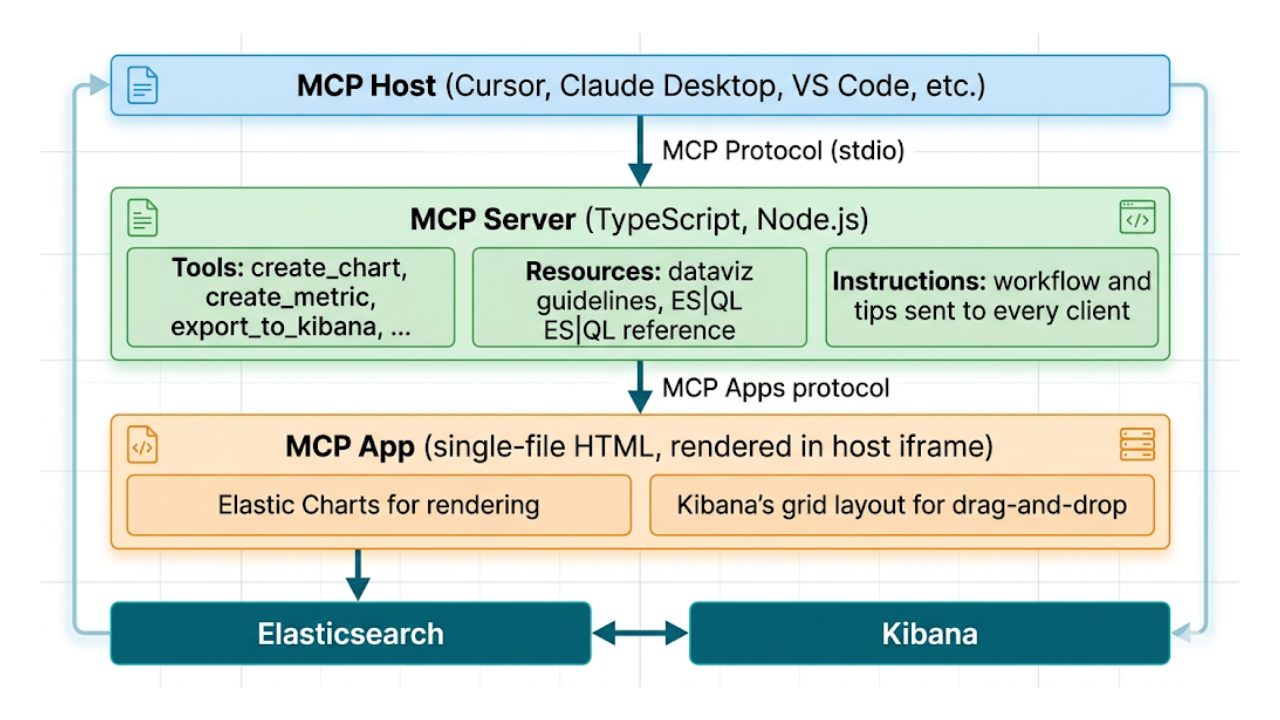
Describe it, don't draw it: AI-native Kibana dashboards via MCP and ES|QL
From prompt to dashboard. Learn how to build Kibana dashboards with natural language, using example-mcp-dashbuilder: an open source MCP application that writes ES|QL queries, creates interactive charts and exports fully functional dashboards directly to Kibana.

March 13, 2026
Entity resolution with Elasticsearch, part 4: The ultimate challenge
Solving and evaluating entity resolution challenges in a highly diverse “ultimate challenge” dataset designed to prevent shortcuts.

March 4, 2026
Entity resolution with Elasticsearch, part 3: Optimizing LLM integration with function calling
Learn how function calling enhances LLM integration, enabling a reliable and cost-efficient entity resolution pipeline in Elasticsearch.

February 26, 2026
Entity resolution with Elasticsearch & LLMs, Part 2: Matching entities with LLM judgment and semantic search
Using semantic search and transparent LLM judgment for entity resolution in Elasticsearch.
February 18, 2026
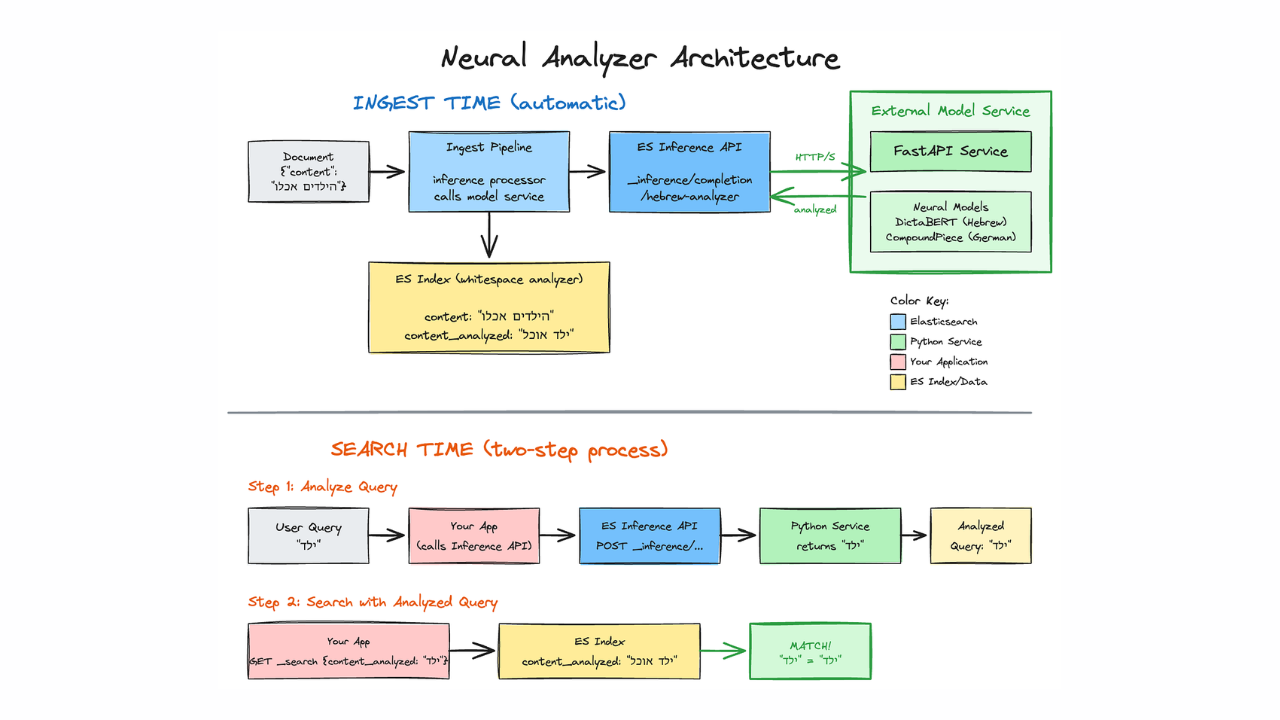
Better text analysis for complex languages with Elasticsearch and neural models
Using neural models and the Elasticsearch inference API to improve search in Hebrew, German, Arabic, and other morphologically complex languages.